A Journey Through 3,000 Years of History

Walk the Same Streets
Li Bai Walked

"Chang'an exists only in my dreams,
Where, then, is the road home?"

— Li Bai, Tang Dynasty Poet

I
Act One

The City of Emperors

Before Chang'an became the world's greatest city, before Li Bai composed his verses, before foreign caravans filled its markets—there was something even more audacious: a Qin emperor who mapped his capital among the stars.
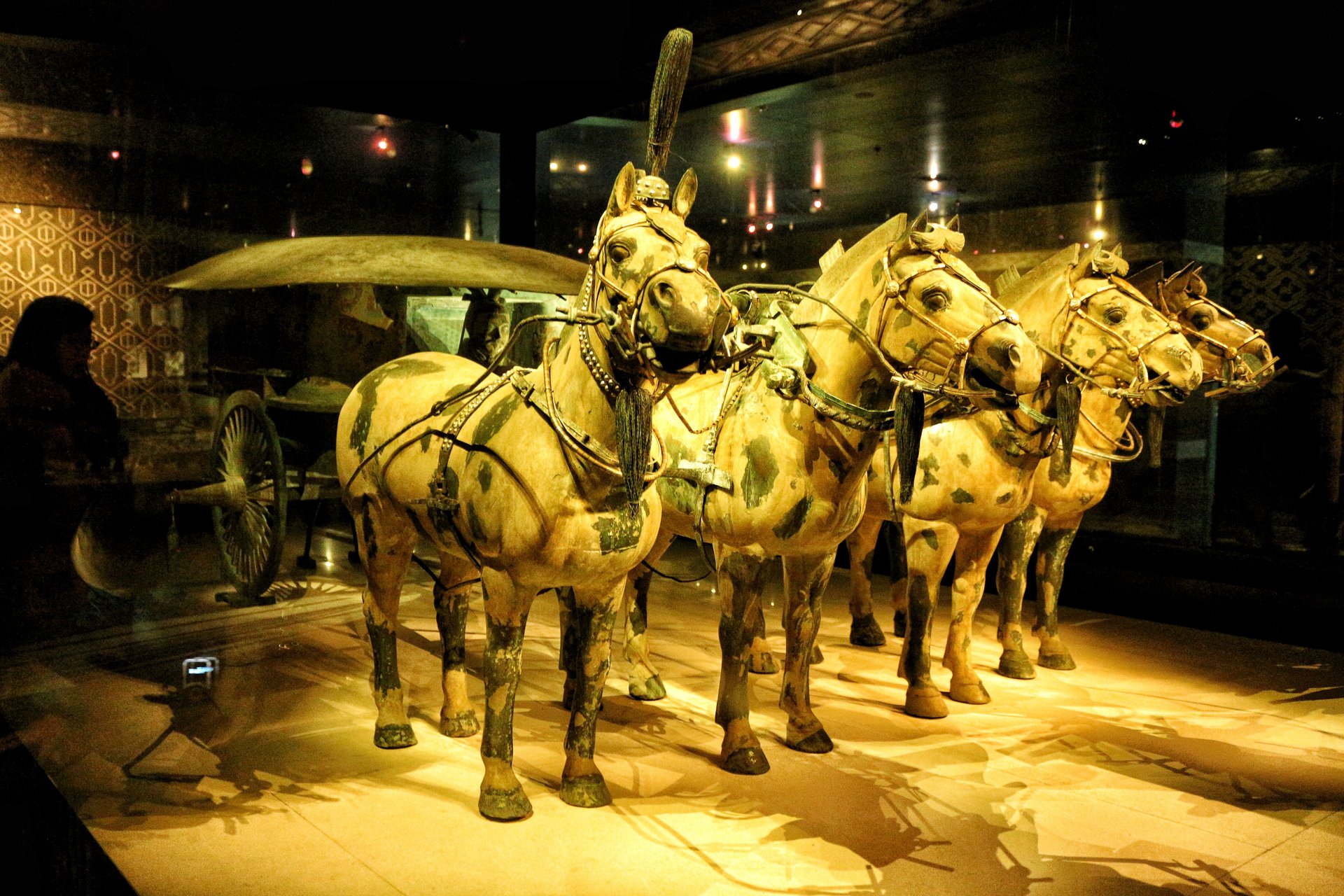
Terracotta Warriors, Xi'an - ancient Chinese army

Six Thousand Years Before the First Emperor

But let us begin even earlier. In the fertile Loess Plateau, 6,000 years ago, the Banpo people built one of China's earliest planned settlements. Remarkably, these ancient Xi'an dwellers averaged 170cm in height—a towering presence by Neolithic standards. They worshipped the fish, as testified by their iconic painted pottery basins featuring the mysterious face-with-fish design, believed to be ritual burial objects for soul summoning.

These early inhabitants laid the agricultural foundation that would eventually support an empire. Their descendants would build something unprecedented: a city that mapped the heavens onto earth.

Living Heritage

The Banpo Archaeological Site remains open to visitors, offering a rare window into prehistoric Chinese civilization just outside modern Xi'an.

Mirroring the Stars: The Most Imaginative City Plan in History

When Qin Shi Huang unified China in 221 BCE, he did something no ruler had ever attempted: he built a capital that mirrored the cosmos itself. The Wei River became his Milky Way. Across its waters, he constructed two palace complexes that corresponded to celestial bodies—Xianyang Palace to the Pole Star (the "Purple Palace," source of the later "Forbidden Purple" of imperial China), and Efang Palace to the Hang (the Flying Horse Nebula).

Between them, bridges spanned the cosmic river, aligned with the Archway stars. This was " faxiang" (法天象地)—"modeling after the patterns of heaven, analogy with the forms of earth." The Qin emperor was not merely building a city; he was creating a terrestrial heaven.

The Origin of "Forbidden City"

The term "Zi" (紫, purple) in Chinese astronomy denoted the circumpolar stars—the realm of the Celestial Emperor. When the Qin positioned their palace at the "Zigong" (紫宫, Purple Palace), they established a tradition that would culminate in Beijing's "Zijin Cheng" (紫禁城, Forbidden City) two millennia later.
Qin-era palace想像图
Terracotta Warriors - once painted in vivid colors

The Warriors Weren't Always Grey

What you see today is only a shadow of what the First Emperor created. The 8,000 terracotta warriors—archers, infantry, cavalry, and charioteers—were once dressed in full color. Purple robes, crimson armor, with blue, pink, black, and white accents adorned each figure. The soldiers averaged 175cm in height, standing in formation like a living, breathing army.

When you stand before them now, imagine purple silks catching the light. Picture bronze chariots pulled by horses in painted trappings. Each warrior wore his own colors—their individuality preserved even in death.

And there were the bronze carriages: each weighing over a ton, crafted from 6,000+ parts cast in a single pouring. The precision of their manufacture rivals anything produced today. This was the army that unified China—painted, proud, and prepared for eternity.

Daming Palace: Where Heaven Touched Earth

Within this extraordinary metropolis stood Daming Palace—the "Grand Light of the East"—a complex so vast it dwarfed the Forbidden City by 4.7 times. Its Hanyuan Hall, the throne room where emperors received foreign envoys, rose like a mountain against the sky.

Here, beneath gilded ceilings and beside lakes of jade, tributary missions from 71 nations—582 times over the Tang dynasty—bowed before the Son of Heaven. Here, history was not merely made; it was performed.
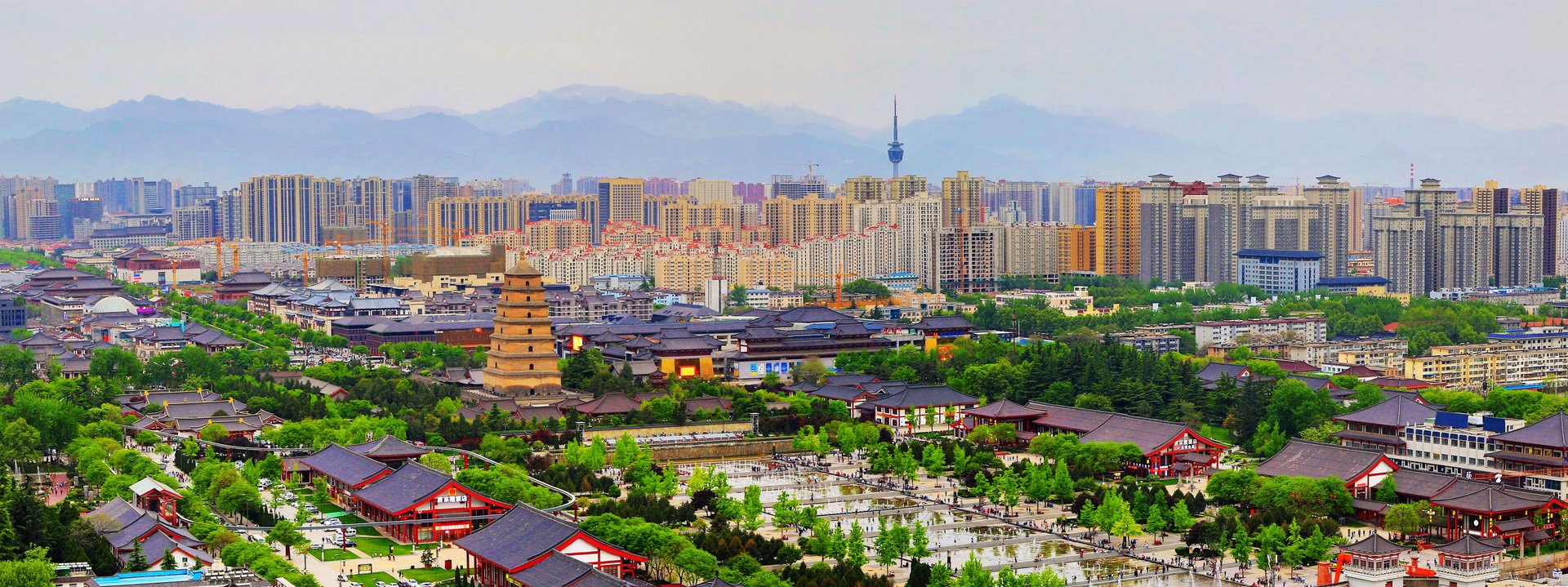
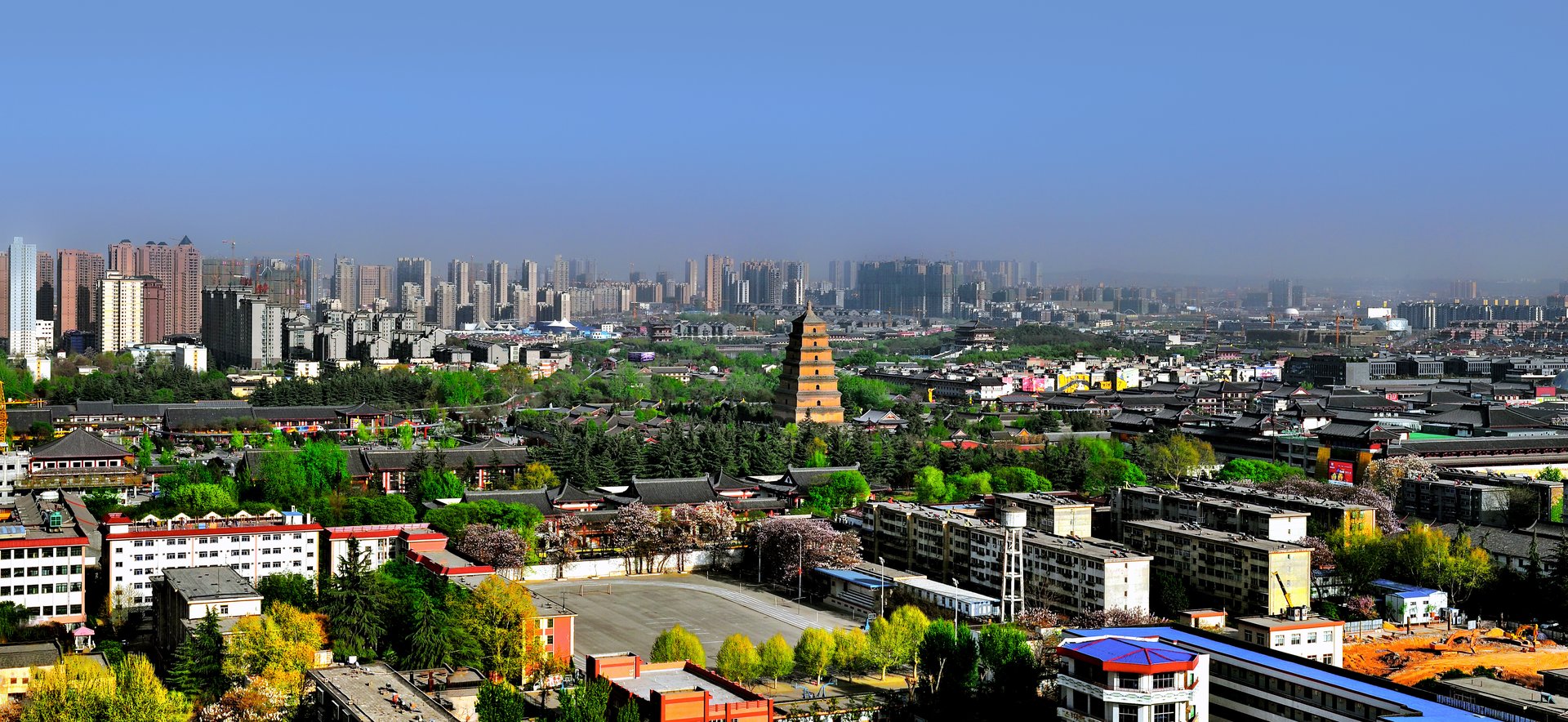
Daming Palace ruins at sunset, Xi'an

九天閶闔開宮殿
萬國衣冠拜冕旒

"The palace gates open like the gates of heaven,
Tributary robes from ten thousand nations
Bow before the emperor's crown."

— Wang Wei, Tang Dynasty Poet

Written in the 8th century, this verse captures the moment when imperial Chang'an opened its ceremonial gates to receive the world.

Walk Among Imperial Ghosts

Stand where emperors once addressed their empire. Walk the foundations of halls that witnessed the rise and fall of dynasties.

Explore Daming Palace
II
Act Two

The City of the World

Beyond the palace walls, Chang'an became something unprecedented—a place where languages blended in the markets, where foreign fashions became court trends, and where a Sogdian merchant could rise to become foreign minister.

Big Wild Goose Pagoda, Xi'an - Silk Road terminus

The Silk Road's Eastern Heart

Caravan bells rang through Chang'an's gates as merchants arrived from Persia, Central Asia, and beyond. The Eastern and Western Markets—dozens of city blocks each—buzzed with commerce in spices, gems, textiles, and ideas. Silk, China's gift to the world, began its journey here.

But Chang'an offered more than goods. It offered transformation. The Hu-style—foreign fashions—swept through the capital. Central Asian music replaced court ceremonial airs. Persian pistachios, Afghan pomegranates, and Indian spices became ingredients in imperial kitchens.

71
Nations Sent Envoys
582
Diplomatic Missions
91
Buddhist Temples

Qujiang Pool: China's First Public Park, 1,000 Years Before Europe's

Long before London's Hyde Park or New York's Central Park, Chang'an had its Qujiang. The Qujiang Pool was not an imperial garden for royal-exclusive enjoyment—it was a rare public space where common citizens could stroll, picnic, and celebrate together.

Here, on festivals, thousands of townspeople would gather. The emperor himself might appear, granting audiences and hosting banquets "with the people"—a concept so unusual in ancient China that poets wrote about it in wonder. Scholars composed poetry here after passing their examinations. Lovers met by its waters. The Qujiang embodied the Tang's extraordinary openness.

A Revolutionary Concept

The idea of a public garden—paid for by imperial funds but open to all citizens—was almost unknown in the ancient world. Chang'an's Qujiang predates European public parks by over a millennium.

Qujiang Pool, Xi'an - Tang Dynasty public garden
Tang Dynasty art showing women in various roles

Tang Women Broke Every Rule

If there's one thing that surprises Western visitors most, it's the extraordinary freedom of Tang Dynasty women. They rode horses astride—unusual for Chinese women in any era. They wore men's clothing ( Hu-style tunics) for hunting and sports. They competed in archery contests alongside men. They owned property, filed divorces, and participated in public life in ways that would not be seen again for centuries.

The famous Tang Galloping Horse ceramics—showcased in museums worldwide—often depict women in male attire, galloping across the steppes. This was not fantasy. It was daily life in Chang'an.

The Galloping Horse That Defied Convention

The "Tang Sancai Galloping Horse" shows a young woman dressed in men's clothing, riding sidesaddle on a horse with its legs in mid-flight. Such scenes were celebrated, not scandalous—a testament to the Tang's remarkable tolerance.

"One life is not enough; one should also have a poetic world. For me, that world was in Chang'an."

— Wang Xiaobo, Chinese Author (1952-1997)

Where Meritocracy Reigned

Perhaps Chang'an's greatest revolutionary idea was the imperial examination—the system that allowed any boy, regardless of birth, to prove his worth through learning. The Qujiang Gardens witnessed scholars celebrating their success, composing poetry, dreaming of futures that birth had not prescribed.

In the Tang's twilight, even the government's highest ranks opened to foreigners. Kang Qian, a Sogdian merchant's son, rose to become Minister of Rites—the equivalent of foreign minister. Of the six prime ministers in one late Tang court, five were of foreign descent.

Scholars celebrating at Qujiang

春風得意馬蹄疾
一日看盡長安花

"With spring wind at my back, my horse runs swift,
In one day I'll see all the flowers of Chang'an."

— Meng Jiao, Tang Dynasty Poet

Written after passing the imperial examination, this verse embodies the intoxicating triumph of ambition fulfilled—the very spirit that drew scholars and dreamers to Chang'an for a thousand years.

Follow the Silk Road

From Xuanzang's translation halls to Qujiang's garden walks—trace the routes that carried not just trade, but transformation.

Discover Big Wild Goose Pagoda Walk the City Wall
III
Act Three

The City Reborn

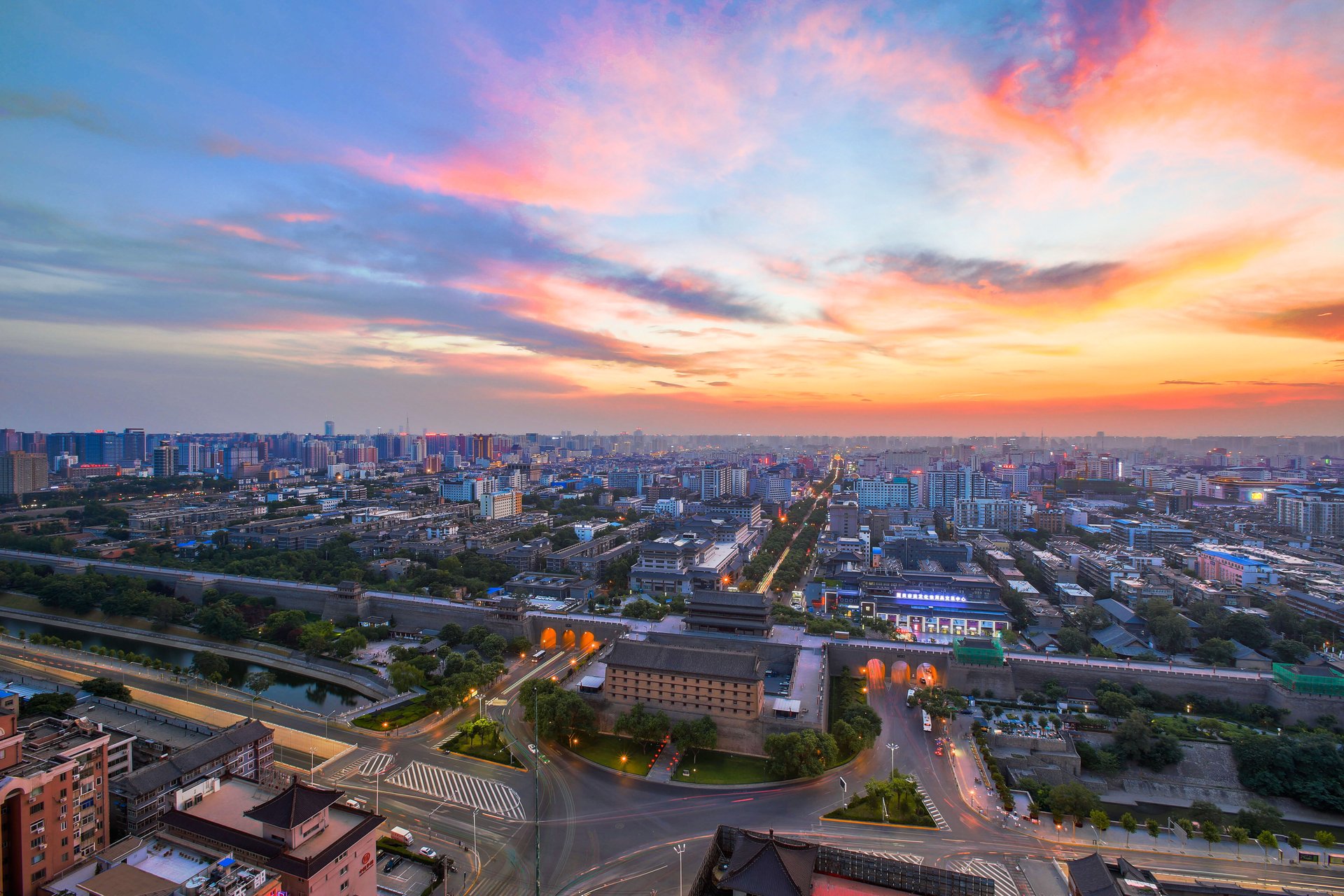
Fourteen centuries have passed since Chang'an's golden age. Yet walk Xi'an's streets today, and the dream refuses to die—rebuilt in steel and ambition, yet still honoring the ground where emperors once walked.

Built to Last: The City Wall's Sticky Rice Secret

When Ming Dynasty engineers rebuilt Xi'an's walls in the 14th century, they created something extraordinary: a wall that has stood for 600 years, nearly intact. The secret? Sticky rice mortar.

Traditional mortar uses lime and sand. Ming engineers added glutinous rice porridge to the mix, creating a compound harder than stone itself. This "糯米灰浆" (sticky rice mortar) resists water and earthquakes with equal tenacity. The wall stretches 13.74 kilometers in circumference—the most complete city fortification surviving anywhere in China.

Walk the wall today and you'll pass its three-layer defense: the闸楼 (barrier tower), 箭楼 (arrow tower), and 正楼 (main gate tower). These were designed to funnel attackers into killing zones where arrows and boiling liquids awaited from three directions.

Engineering Marvel

The sticky rice mortar formula was so effective that some sections of these 600-year-old walls have never needed major repair. Modern engineers still study the Ming technique for heritage conservation projects.

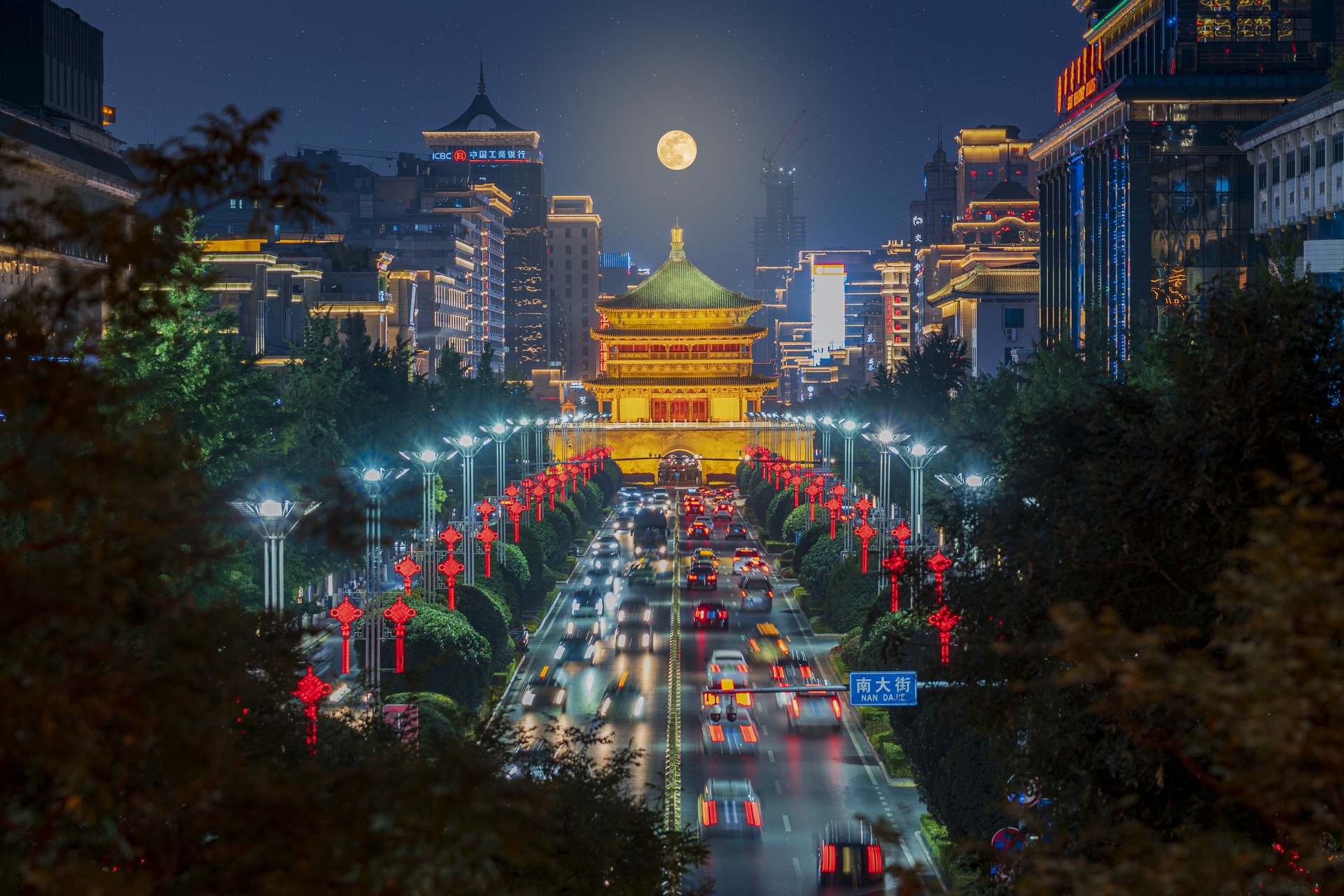
Xi'an City Wall at dusk, modern and ancient coexist

Xi'an: The Phoenix Rises

Today's Xi'an is no mere museum. It is a living city of 13 million people where BYD electric vehicles roll off assembly lines, where over 400 research institutions push the boundaries of science, and where 163 museums preserve humanity's collective memory.

The Belt and Road Initiative has returned Xi'an to its historic role as China's western gateway. Bullet trains now link the city to Beijing in five hours; international flights connect it to major global hubs. The ancient trade routes that made Chang'an great have found new form.

163
Museums
400+
Research Centers
69
Academicians

Remarkably, approximately one-quarter of Xi'an's urban area remains designated as a historical preservation zone—where traditional courtyard houses (四合院) stand beside modern buildings, and ancient alleyways wind past contemporary cafes.

Modern Xi'an skyline with ancient wall
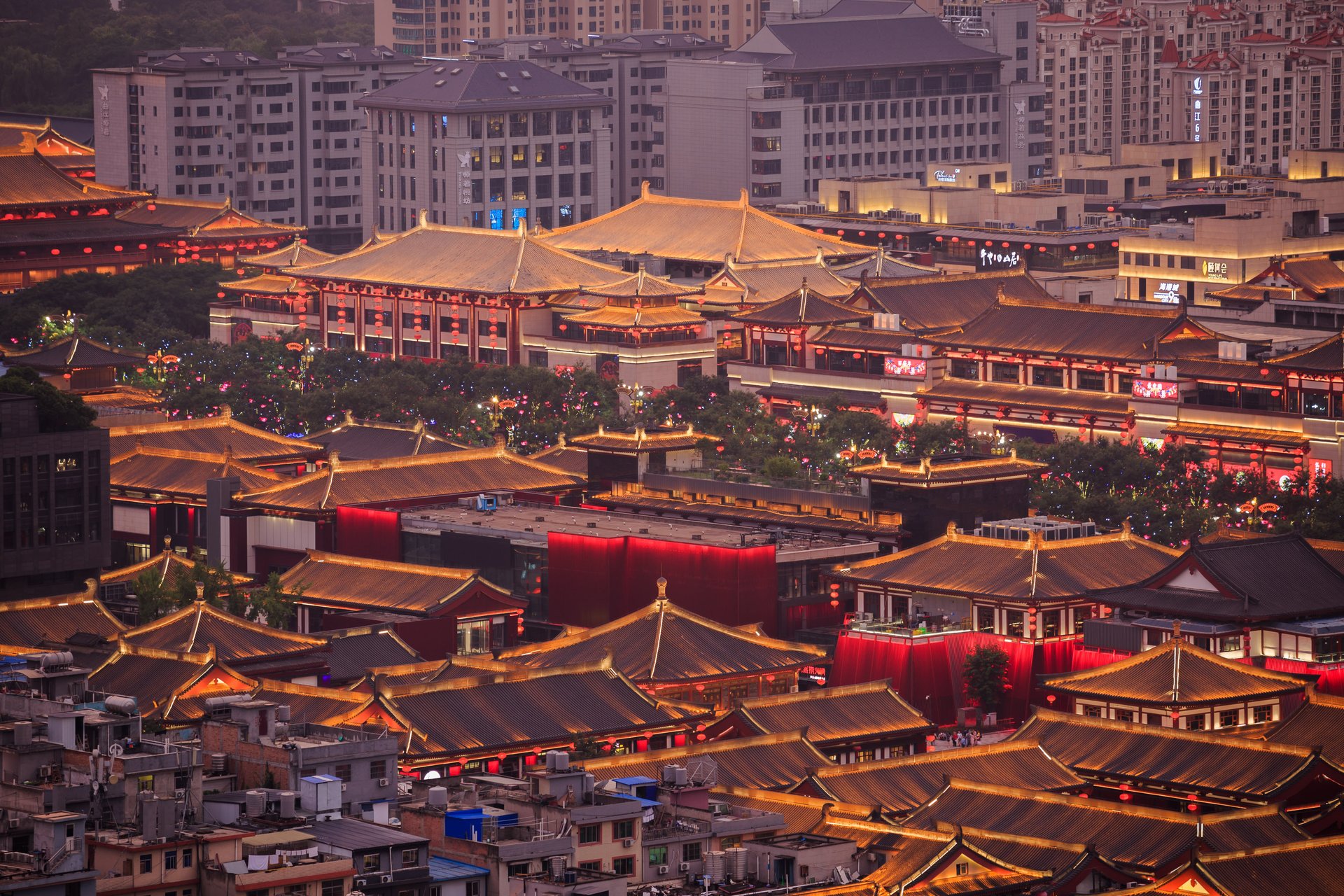
Zhuoyue Street, Xi'an - Tang Dynasty reconstruction

Walking Zhuoyue Street Today

Today, you can walk the same path where Li Bai once wandered. At Zhuoyue Street, an exact reconstruction of the Tang-era avenue—150 meters wide, flanked by traditional architecture—has risen beside the ancient foundations. Stand where the poet stood. Look up toward the mountains he saw.

This is Xi'an's gift: not just preserving the past, but making it accessible. You can touch the original walls of Daming Palace, see the very stones where envoys from 71 nations once gathered, walk the avenue where imperial examinations announced their results.

"One life is not enough; one should also have a poetic world."

— Wang Xiaobo

Begin Your Chang'an Journey

The streets that shaped civilizations still await. The halls where empires gathered still stand. Your Xi'an adventure begins with a single step—the same step Li Bai once took.

Plan Your Trip to Xi'an